Sinfully Misleading
A current TV commercial evokes a three-decade old examination of our government's deliberate attempt to spread disinformation at the behest of private corporations

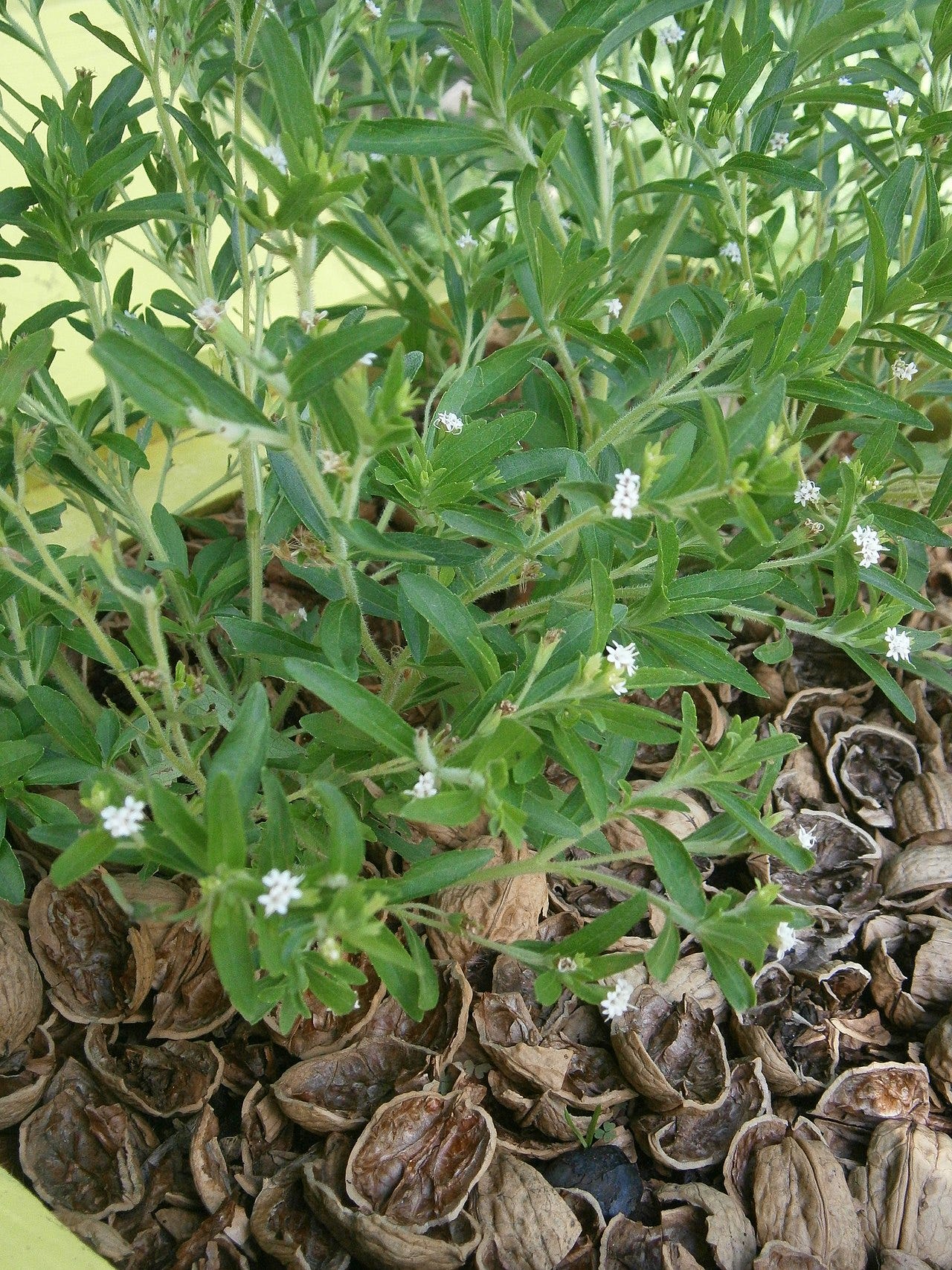
This morning, while watching hurricane coverage on CNN, I chanced to see a commercial for zero-calorie "Splenda Stevia" and how it's "grown by American farmers." Which took me back to 1996, when my sister Linda and I wrote an article for the magazine New Age Journal called "Sinfully Sweet," all about the FDA's campaign to warn consumers away from using stevia, which that agency labeled an “untested sweetener" that it warned was potentially hazardous to their health (despite its having been used for centuries with no ill effects and widely tested by the Japanese government) and might even have contraceptive effects. Eventually, in fact, we wound up doing a short book called "The Stevia Story," which agents of the U.S Food and Drug Administration actually confiscated and threatened to destroy when it was carried by a stevia importer and sole along with his product.
The real story, of course, had nothing to do with safety, and everything to do with a “trade complaint” filed by an unidentified party, which all available evidence indicated was none other than G.D. Searle, the makers of NutraSweet (the brand name for aspartame), a company originally run by Donald Rumsfeld (yes, that Donald Rumsfeld) which subsequently became a subsidiary of Monsanto. At one point in the course of researching our article, we managed to question a couple of top FDA officials about the basis of the agency’s refusal at the time to grant stevia GRAS (generally recognized as safe) status, we were told that it lacked the kind of information necessary for such approval. On the other hand, however, they had no such reservations about the safety of aspartame, having “a portfolio of toxicological studies of very high quality” that taken together, led them to the “inescapable conclusion that this artificial sweetener that has long been associated with a wide range of adverse health effects was A-OK for consumption.
(If you’d like to read the original article, which is quite revealing, even three decades later, my sister has created a link to it here).
All of which has a direct bearing on the business of why so many people simply refuse to take the government at its word, and give credence to what elected officials and bureaucrats would like to convince us is “misinformation.” In the case of the FDA, in fact, we saw another more recent example of this when that agency attempted to discredit the safety and efficacy of the Nobel prize-winning drug ivermectin as a remedy and preventive for Covid-19 (which was a direct threat to the Emergency Use Authorization granted to vaccine manufacturers such as Pfizer). And raises the question of where the actual “misinformation” (or “disinformation”) is really emanating from.
Congratulations on another excellent piece of Investigative journalism Linda.
I created a Liqueur in Scotland in 2014 & I was going to use Stevia as a natural sweetener, but was put off by the negative press on it, and ended up using Agave syrup, which is still possibly better, but it was interesting to read your article.
And not the 1st I've read recently! Keep up the good work!
Bruce (Sovereign Scot) Borthwick